

Akupanels (wood slat acoustic panels with PET felt backing) are widely used in offices, commercial interiors, and residential spaces for their ability to combine aesthetic warmth with acoustic performance. However, different wall substrates require different installation approaches to ensure long-term stability and optimal results.
In this guide, Leedings explains how to install Akupanels on drywall, concrete, and brick walls, including recommended tools, fixing methods, and best practices.
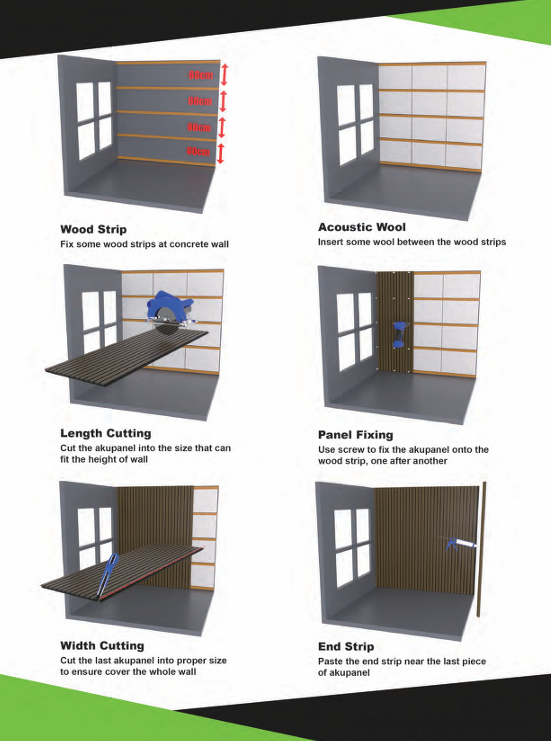
Understanding Akupanel Structure
Before installation, it’s important to understand how Akupanels work structurally:
Front layer: MDF or wood veneer slats
Backing: PET acoustic felt
Installation surface: wall substrate (drywall, concrete, or brick)
The PET felt backing allows flexible fixing options while maintaining sound absorption.
Tools and Materials You’ll Need
Akupanels
Measuring tape and spirit level
Pencil or chalk line
Construction-grade adhesive
Drill and screwdriver
Wall plugs (for concrete and brick)
Screws (recommended: black or concealed head)
Fine-tooth saw or utility knife
Installing Akupanels on Drywall
Drywall is the most common interior wall surface and offers the easiest installation.
Recommended Method
Adhesive + optional screw reinforcement
Step-by-Step
Clean the drywall surface and remove dust
Mark reference lines to ensure straight alignment
Apply construction adhesive evenly to the back of the PET felt
Press the Akupanel firmly against the wall
For large panels or high-traffic areas, add screws through the felt into wall studs
Tips
Always locate studs if using screws
Avoid overloading drywall with excessive panel weight
Adhesive-only installation is suitable for most residential projects
Installing Akupanels on Concrete Walls
Concrete walls are common in commercial buildings and require mechanical fixing.
Recommended Method
Screws + wall plugs (anchors)
Step-by-Step
Mark drilling points through the PET felt
Drill holes into the concrete wall
Insert appropriate wall plugs
Fix Akupanels using screws through the felt backing
Ensure panels are level before fully tightening screws
Tips
Adhesive alone is not recommended for concrete
Use vibration-resistant anchors in commercial environments
Screw heads remain visually hidden by the slat structure
Installing Akupanels on Brick Walls
Brick walls vary in hardness and require careful drilling.
Recommended Method
Screws + wall plugs
Step-by-Step
Drill into brick (not mortar joints if possible)
Insert wall plugs suitable for masonry
Fix panels through the PET felt backing
Adjust alignment before final tightening
Tips
Hollow bricks require specialized anchors
Avoid excessive torque to prevent brick cracking
Adhesive can be used as a secondary support only
Vertical or Horizontal Installation?
Akupanels can be installed:
Vertically for increased perceived height
Horizontally for wider spatial effect
The installation method remains the same regardless of orientation, but reference lines are critical for alignment.
Improving Acoustic Performance
To enhance sound absorption:
Leave a small air gap behind the panels
Combine Akupanels with additional PET acoustic panels
Use full-wall coverage in echo-prone spaces
Correct installation directly affects acoustic performance.
Common Installation Mistakes to Avoid
Using adhesive only on concrete or brick walls
Skipping wall plugs on masonry surfaces
Poor alignment of the first panel
Cutting panels from the front, damaging the veneer
Why Choose Leedings Akupanels?
Leedings Akupanels are designed for:
Consistent slat alignment
Durable PET acoustic felt backing
Compatibility with multiple wall substrates
Reliable acoustic performance in real-world installations
With advanced manufacturing capability and strict quality control, Leedings provides Akupanels trusted by architects, contractors, and interior designers worldwide.
Final Thoughts
Installing Akupanels on drywall, concrete, or brick walls is straightforward when the correct fixing method is used. By matching the installation technique to the wall substrate, you ensure long-term stability, clean aesthetics, and effective sound absorption.
For project-specific installation advice or technical support, the Leedings team is always ready to help.