

How to Install Akupanels in Renovation Projects
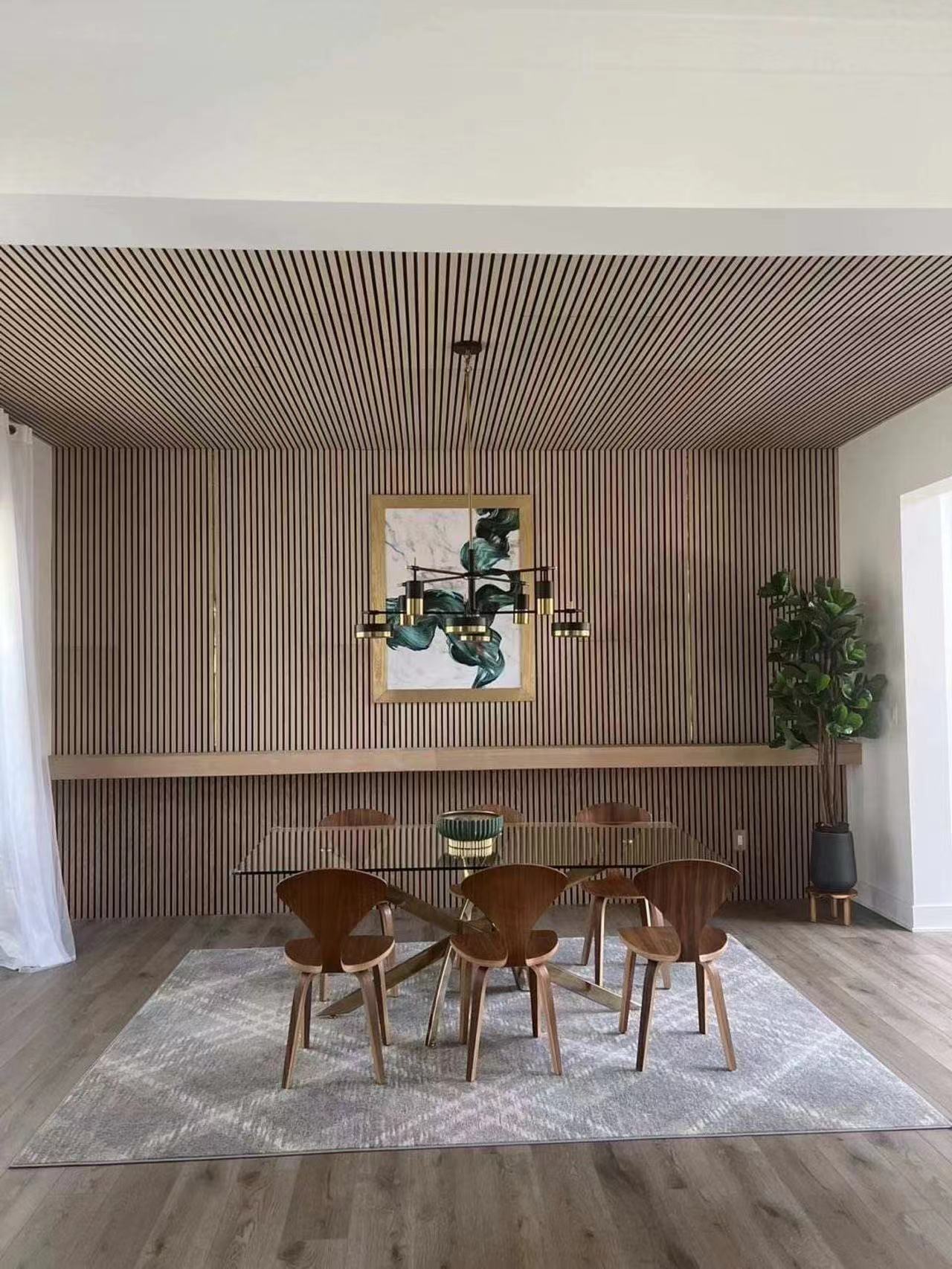
Renovation projects present unique challenges compared to new construction—uneven walls, existing finishes, limited space, and time constraints all affect installation quality. In recent years, akupanels (wood slat acoustic wall panels) have become a popular solution in renovation due to their ability to upgrade both acoustics and interior aesthetics quickly.
However, successful installation in renovation environments requires proper planning and technique.
In this guide, Leedings Acoustic, a professional acoustic panels supplier in China, explains how to install akupanels effectively in renovation projects.
Why Akupanels Are Ideal for Renovation Projects
Compared to traditional wall treatments, akupanels offer several advantages in renovation scenarios:
- Minimal demolition required
- Fast installation process
- Ability to cover existing wall imperfections
- Immediate improvement in acoustic performance
This makes acoustic wall panels an efficient solution for offices, hotels, retail spaces, and residential upgrades.
Step 1: Evaluate Existing Wall Conditions
Before installation, it is essential to assess the current wall condition.
Check for:
- Surface flatness
- Structural stability
- Moisture or damage
- Existing materials (tile, drywall, concrete, etc.)
Uneven or damaged walls are common in renovation projects and may require additional preparation before installing akupanels.

Step 2: Choose the Right Installation Method
Selecting the appropriate method is critical in renovation environments.
Option 1: Direct Mounting (Quick Solution)
- Suitable for relatively flat walls
- Uses screws or adhesive
- Fast and cost-effective
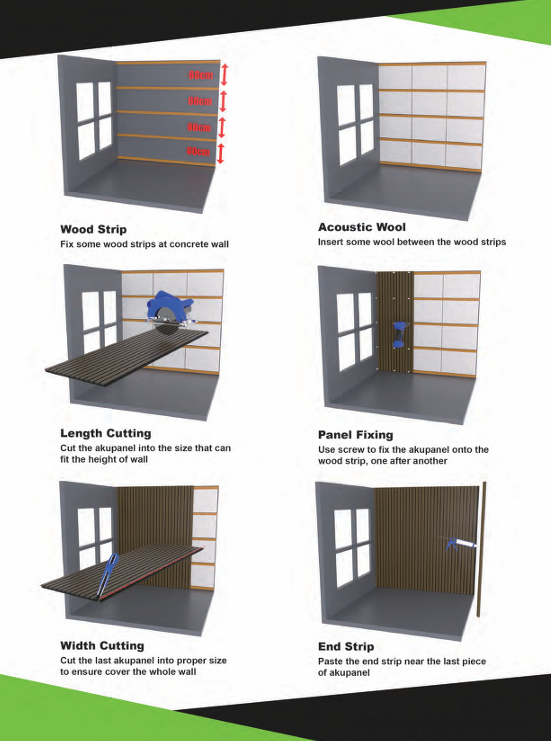
Option 2: Batten System (Recommended for Renovation)
- Ideal for uneven walls
- Creates a flat installation surface
- Allows space for wiring or insulation
Many installers prefer batten systems when working with older structures or inconsistent wall surfaces.
Step 3: Prepare the Surface
Proper preparation improves installation stability and durability.
Preparation steps:
- Clean the wall surface (remove dust, grease, debris)
- Repair major cracks or loose areas
- Mark installation reference lines
For renovation projects, surface preparation is often the most important step to ensure successful installation of acoustic wall panels.
Step 4: Plan Panel Layout
Before fixing panels, plan the layout carefully.
Consider:
- Panel orientation (vertical or horizontal slats)
- Alignment with ceilings and corners
- Position of sockets, switches, and fixtures
Dry fitting panels before installation helps reduce errors and ensures a professional finish.
Step 5: Install the Panels
For Direct Mounting:
- Position the panel
- Apply adhesive if needed
- Fix screws through the PET felt backing into the wall
For Batten System:
- Install battens onto the wall
- Ensure battens are level and aligned
- Fix akupanels onto the battens
Both methods are widely used in acoustic panels China projects, depending on wall conditions.
Step 6: Cut Panels to Fit Renovation Constraints
Renovation projects often require cutting panels around:
- Electrical sockets
- Pipes or structural elements
- Corners and edges
Use appropriate tools such as:
- Circular saw for straight cuts
- Jigsaw for detailed cutouts
Proper cutting ensures akupanels fit seamlessly into existing structures.
Step 7: Final Inspection and Adjustment
After installation:
- Check alignment and spacing
- Ensure panels are securely fixed
- Clean surface dust or debris
A final inspection ensures the acoustic wall panels meet both visual and functional expectations.

Common Challenges in Renovation Projects
Uneven Walls
→ Use batten systems or shimming
Limited Installation Space
→ Use direct mounting to minimize depth
Existing Finishes (Tiles, Glass)
→ Use specialized adhesives or mounting systems
Hidden Wiring
→ Plan installation layout carefully
Understanding these challenges helps avoid common installation problems.
Why Work with a Professional Acoustic Panels Supplier
Renovation projects require flexible and reliable materials.
At Leedings Acoustic, we provide:
- Easy-to-install akupanels
- Consistent panel dimensions
- Custom sizes for renovation needs
- Technical support for installers
As a leading acoustic panels supplier in China, we support global B2B clients with practical solutions for both new construction and renovation projects.
Conclusion
Installing akupanels in renovation projects is an efficient way to upgrade interior spaces with minimal disruption. By selecting the right installation method, preparing surfaces properly, and planning carefully, installers can achieve high-quality results even in challenging environments.
Key takeaways:
- Evaluate wall conditions before installation
- Choose between direct mounting and batten systems
- Prepare surfaces and plan layout carefully
- Use proper tools for cutting and fitting
For high-quality acoustic wall panels, Leedings Acoustic is your trusted acoustic panels supplier in China, providing reliable solutions for renovation and new construction projects.