

Wood slat Akupanels are designed to create a refined architectural finish, but achieving a professional result depends on more than simply installing the panels. After cutting panels around corners, sockets, windows, doors, or wall ends, the exposed edges need to be finished properly.
Poorly finished edges can result in:
- Visible MDF or panel cores
- Chipped wood veneer
- Rough PET felt edges
- Uneven transitions
- An unfinished appearance at corners and terminations
So, how can you finish Akupanel edges cleanly after cutting?
The answer depends on the type of edge, the installation location, and whether the edge will remain visible.
In this guide, Leedings Acoustic, a professional acoustic panels supplier in China, explains practical ways to create clean, durable edges on Akupanels and wood slat acoustic wall panels.
Why Akupanel Edges Need Finishing
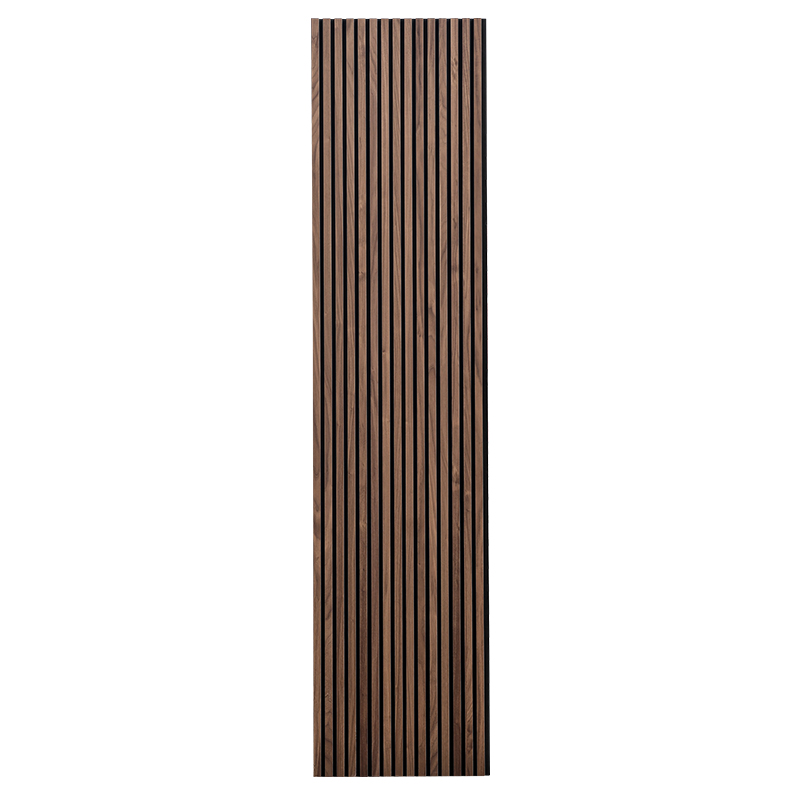
A standard Akupanel is typically constructed from:
- Decorative wood veneer slats
- MDF or wood-based slat cores
- PET acoustic felt backing
When the panel is cut in the middle, these internal layers can become visible.
For example, cutting the panel to fit the end of a wall may expose the ends of the wood slats and the PET felt backing.
Although these exposed layers do not necessarily affect the acoustic function of the panel, they can significantly affect the visual appearance.
This is particularly important for:
- Hotel interiors
- Office reception areas
- Restaurants
- Retail stores
- High-end residential projects
- Architectural feature walls
Step 1: Make a Clean Initial Cut
The quality of the finished edge starts with the quality of the cut.
For straight cuts
Use:
- Circular saw
- Track saw
- Table saw
Use a sharp, fine-tooth blade designed for veneered or laminated wood products.
For detailed cuts
Use:
- Jigsaw
- Fine-tooth wood blade
For small adjustments to PET felt, a sharp utility knife can also be useful.
A clean initial cut reduces the amount of finishing required afterward.
Step 2: Lightly Sand the Cut Edge
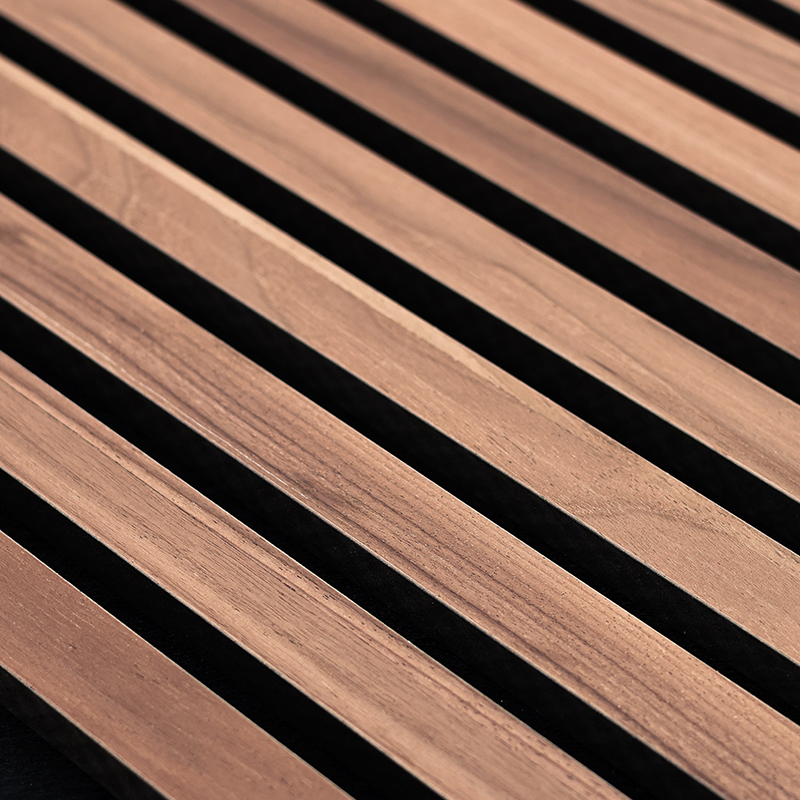
For minor roughness, fine-grit sandpaper can be used to smooth the edge.
A practical approach is:
- Start with approximately 180-grit sandpaper.
- Sand lightly along the cut edge.
- Finish with approximately 220-grit if necessary.
- Remove dust with a soft brush or dry cloth.
Avoid aggressive sanding, particularly on natural wood veneer, because excessive sanding can remove the decorative surface.
For PET acoustic felt, avoid rubbing the edge excessively because it can create a fuzzy appearance.
Step 3: Use Matching Edge Banding for Exposed Wood Edges
When a cut creates an exposed MDF or wood-based edge that will remain visible, edge banding can provide a cleaner appearance.
Suitable materials may include:
- Matching wood veneer edge banding
- ABS edge banding
- Melamine edge banding
For premium architectural projects, matching wood veneer is often the preferred option because it creates a closer visual match with the original slats.
Edge banding is particularly useful when an Akupanel terminates visibly at:
- Wall corners
- Door openings
- Window openings
- Cabinet interfaces
Step 4: Consider an End Trim or Frame
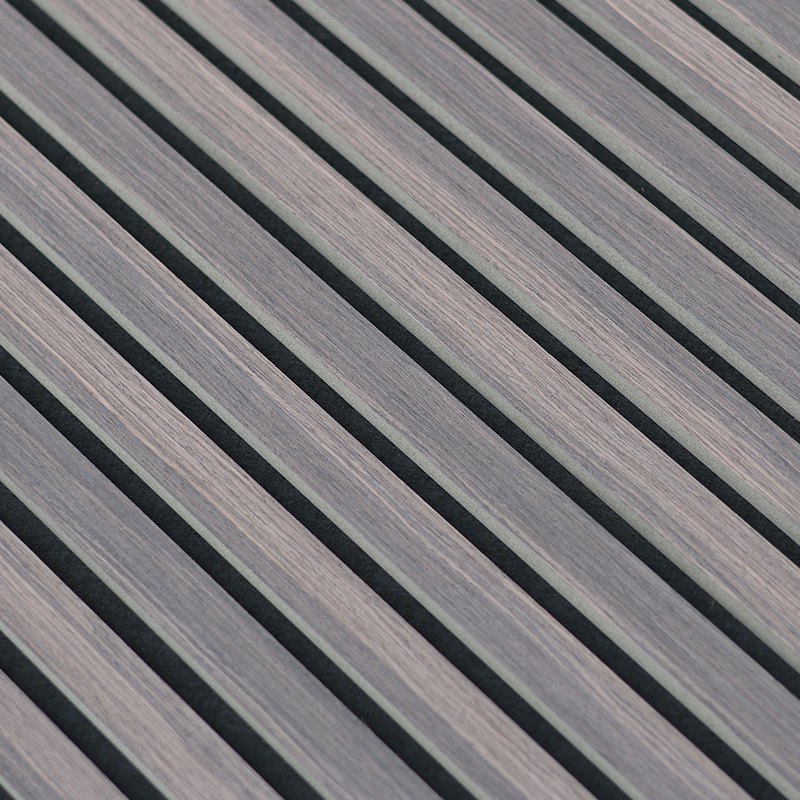
For highly visible panel terminations, a dedicated trim can provide a more professional finish.
Common options include:
- Solid wood trim
- Matching veneer trim
- MDF trim
- Metal edge profiles
- Aluminum profiles
A trim can cover the exposed end of the panel while creating a deliberate architectural transition.
This is often preferable to trying to make a raw cut edge completely invisible.
Step 5: Finish PET Felt Edges Carefully
One of the advantages of PET acoustic panels and Akupanels with PET backing is that the felt itself can provide a relatively clean edge.
However, cutting can sometimes produce loose fibers.
To improve the appearance:
- Make a clean cut using a sharp blade.
- Remove loose fibers carefully.
- Avoid pulling individual fibers from the edge.
- Use a fine scissors or precision knife for small corrections.
Do not burn or melt the PET edge with an open flame or uncontrolled heat source.
How to Finish Akupanel External Corners
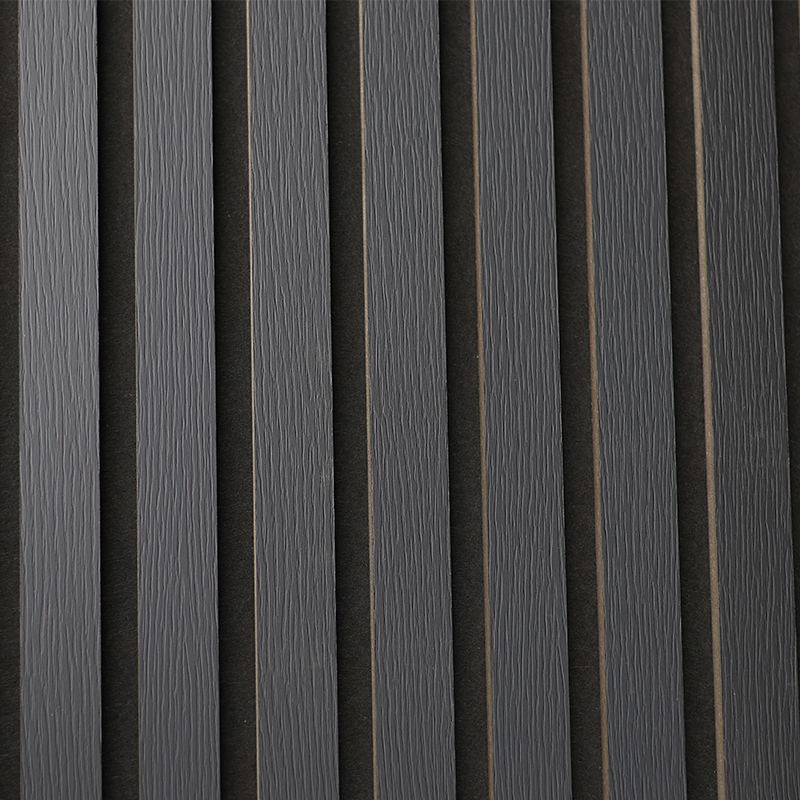
External corners require particularly careful planning because two visible panel edges meet.
There are several common solutions.
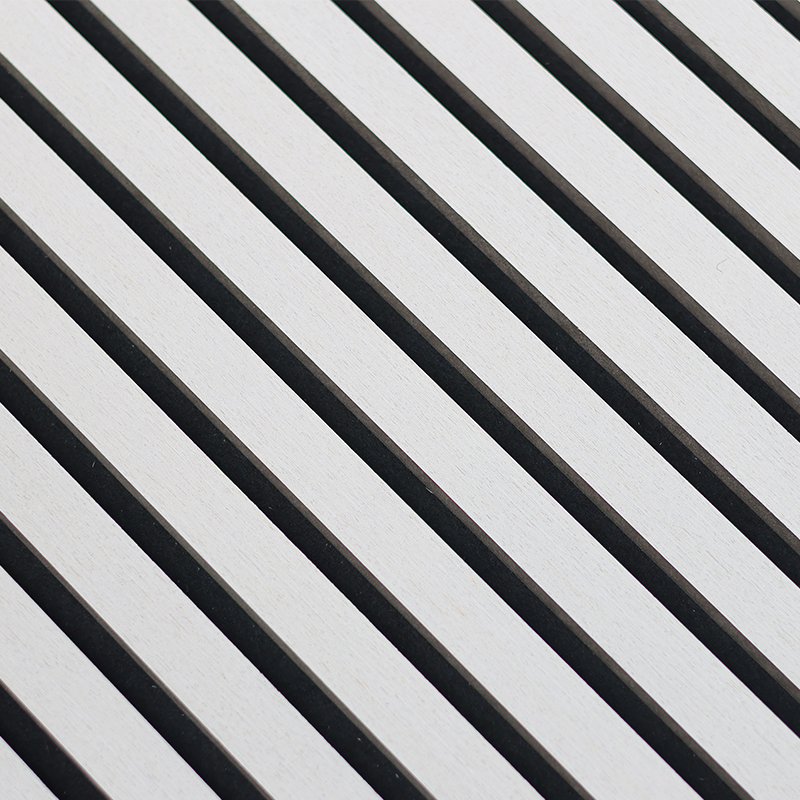
Option 1: Mitre Cut
Two panels can be cut at approximately 45° to form a continuous-looking corner.
Advantages:
- Clean architectural appearance
- Minimal visible edge
- Suitable for premium installations
However, mitre cutting requires accurate measurements and a precise saw setup.
Option 2: Use a Corner Trim
A wood or metal corner profile can cover the joint.
This method is generally easier and more forgiving during installation.
It can also protect the panel edges from impact.
Option 3: Let One Panel Overlap the Other
In some designs, one panel can terminate against the other.
This is simpler to install but should be planned carefully to ensure the resulting edge looks intentional rather than unfinished.
How to Finish Internal Corners
Internal 90° corners are generally easier.
A common approach is:
- Install one panel into the corner.
- Install the second panel against it.
- Ensure the slat pattern remains visually consistent.
Where necessary, a small trim or shadow gap can hide minor irregularities.
For renovation projects with uneven walls, a batten system can help create a more accurate corner alignment.
How to Finish the End of an Akupanel Wall
If the last panel ends in the middle of a wall, the cut edge becomes highly visible.
There are three common solutions:
1. Add a Vertical Trim
A matching wood trim can create a clean termination.
2. Use an End Profile
A metal or wood profile can protect the edge and create a contemporary appearance.
3. Plan the Layout to Avoid a Narrow Final Panel
This is often the best solution.
Before installation, calculate the total wall width and adjust the starting position so that both ends have visually balanced panel widths.
This can make the entire installation look considerably more professional.
What About Exposed Wood Slat Ends?
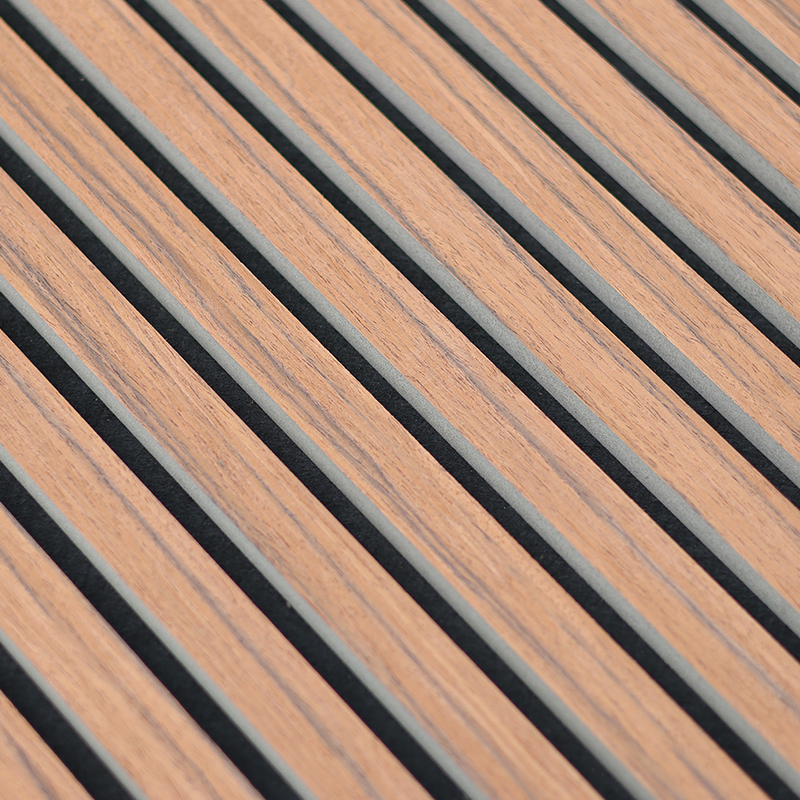
When an Akupanel is cut across the slats, the ends of individual slats may become visible.
Depending on the project, you can:
- Sand the ends lightly
- Apply matching edge treatment
- Cover them with trim
- Use a factory-finished edge where available
For large commercial projects, requesting factory-cut or factory-finished components can reduce on-site finishing work.
Can You Paint the Cut Edge?
Yes, but it should be approached carefully.
If the exposed area is MDF or another wood-based substrate, a compatible coating may be used to create a more uniform appearance.
For natural wood veneer, however, painting the exposed edge may produce a noticeably different appearance from the surrounding veneer.
Where appearance is important, matching veneer or trim is generally preferable.
How to Avoid Visible Edge Problems in the First Place
The easiest edge to finish is the one that does not need to be heavily corrected.
Before installation:
Plan the Layout
Determine where panel cuts will occur.
Use Factory Cutting Where Practical
For repetitive commercial projects, factory-cut panels can reduce installation errors.
Position Cuts in Less Visible Areas
Where possible, place unavoidable cuts:
- Near corners
- Behind furniture
- Around openings
- At wall ends
Order Matching Accessories
Ask your acoustic panels supplier about matching edge trims, profiles, or finishing components before production.
Common Akupanel Edge Finishing Mistakes
Using a Dull Saw Blade
A dull blade creates:
- Veneer chipping
- Ragged edges
- Excessive vibration
Always use a sharp blade appropriate for veneered wood.
Sanding Too Aggressively
Excessive sanding can damage natural veneer and create visible differences in surface color or texture.
Leaving Raw MDF Exposed
A raw MDF edge may be especially noticeable under direct lighting.
If the edge is visible, consider edge banding or a trim solution.
Ignoring the PET Felt Edge
A rough felt edge can make an otherwise high-quality installation look unfinished.
Make clean cuts and remove loose fibers carefully.
Why Factory Support Matters
For large commercial projects, edge finishing should be considered during product development rather than left entirely to the installer.
At Leedings Acoustic, we can support customers with:
- Custom Akupanel dimensions
- Factory cutting
- Custom panel configurations
- Matching PET felt colors
- Wood veneer options
- OEM/ODM development
- Installation guidance
As an experienced acoustic panels supplier in China, we help distributors, contractors, furniture manufacturers, and architectural clients reduce on-site cutting and finishing problems.
Frequently Asked Questions
Do Akupanels need edge banding?
Not necessarily. If the cut edge is hidden or covered by another panel, additional edge banding may not be required. Visible edges generally benefit from trim, edge banding, or another finishing solution.
Can I sand Akupanel edges?
Yes. Fine-grit sandpaper can be used for light edge smoothing, but avoid aggressive sanding of wood veneer or PET felt.
What is the best way to finish an exposed Akupanel edge?
For a premium architectural finish, a matching wood trim, veneer edge band, or dedicated edge profile is usually preferable to leaving the raw cut edge exposed.
Can Akupanels be factory-cut?
Yes. For suitable projects, custom cutting can reduce installation time, material waste, and the risk of on-site cutting errors.
Conclusion
Finishing Akupanel edges cleanly is an important part of achieving a professional acoustic wall installation.
The best results come from combining:
- Accurate cutting
- Sharp, appropriate tools
- Light edge sanding
- Matching edge banding or trim
- Proper corner detailing
- Careful layout planning
For highly visible commercial interiors, edge treatment should be considered during the design and specification stage rather than after installation.
Leedings Acoustic provides customized Akupanels and acoustic wall panels, including custom dimensions, colors, and manufacturing support for distributors, contractors, furniture manufacturers, and architectural projects worldwide.