

The global acoustic panel industry is entering a new stage in 2026.
Acoustic panels are no longer viewed simply as functional materials installed to reduce echo. Across commercial offices, hospitality, education, healthcare, retail, and residential projects, acoustic products are increasingly expected to perform three functions at the same time: acoustic control, architectural design, and sustainability.
Recent market research indicates continued growth in the global acoustic panel market. One 2026 market analysis estimates the global market at approximately USD 15.38 billion in 2026, while another estimates the architectural acoustic panels segment at approximately USD 9.78 billion. Although market estimates vary by product scope and methodology, the direction is consistent: demand for acoustic solutions continues to expand.
At the same time, manufacturers and buyers are facing a more demanding market. Acoustic performance alone is no longer enough. Sustainable materials, verified environmental information, visual integration, customization, installation flexibility, and long-term supply reliability are becoming increasingly important.
So, what are the most important global acoustic panel market trends in 2026?

1. Sustainability Is Becoming a Basic Requirement
One of the biggest changes in the acoustic panel market is the shift from “sustainable as a premium option” to “sustainable as an expected specification.”
Architects, interior designers, developers, and procurement teams increasingly ask about:
- Recycled content
- Recyclability
- VOC emissions
- Material composition
- Product transparency
- Manufacturing impacts
- End-of-life options
Recent 2026 market research identifies recycled PET felt as one of the leading materials within the sustainable acoustic panel segment. Recycled PET is particularly attractive because it combines acoustic functionality with an established recycled-material supply chain.
This is particularly relevant to PET acoustic panels and polyester fiber acoustic panels, which can use recycled polyester fibers made from post-consumer PET.
For B2B buyers, this means that simply describing a product as “eco-friendly” is becoming less persuasive.
Customers increasingly want to know:
How much recycled material is used? How is it sourced? What certifications or documentation are available?
2. Recycled PET Acoustic Panels Are Moving Into the Mainstream
Recycled PET is one of the most important materials shaping the modern acoustic panel market.
The advantages are straightforward:
- Lightweight construction
- Effective sound absorption
- Flexible processing
- Wide color options
- CNC cutting capability
- High design flexibility
- Recycled-content potential
Unlike traditional acoustic materials that may be visually hidden behind architectural finishes, PET felt can be directly exposed as part of the interior design.
This makes PET acoustic panels particularly suitable for offices, education, hospitality, retail, and other spaces where acoustics and aesthetics need to be addressed simultaneously.
However, the market is also becoming more technically demanding.
A recent peer-reviewed study noted that sustainable acoustic materials have received substantially more research attention, but their adoption in actual building projects still faces challenges related to reliable performance data, cost, standards, and practical implementation.
This creates an important opportunity for experienced acoustic panels suppliers that can provide both product performance and technical documentation.
3. Acoustic Panels Are Becoming Part of the Interior Design Language
In the past, acoustic treatment was often something designers tried to hide.
In 2026, the trend is moving in the opposite direction.
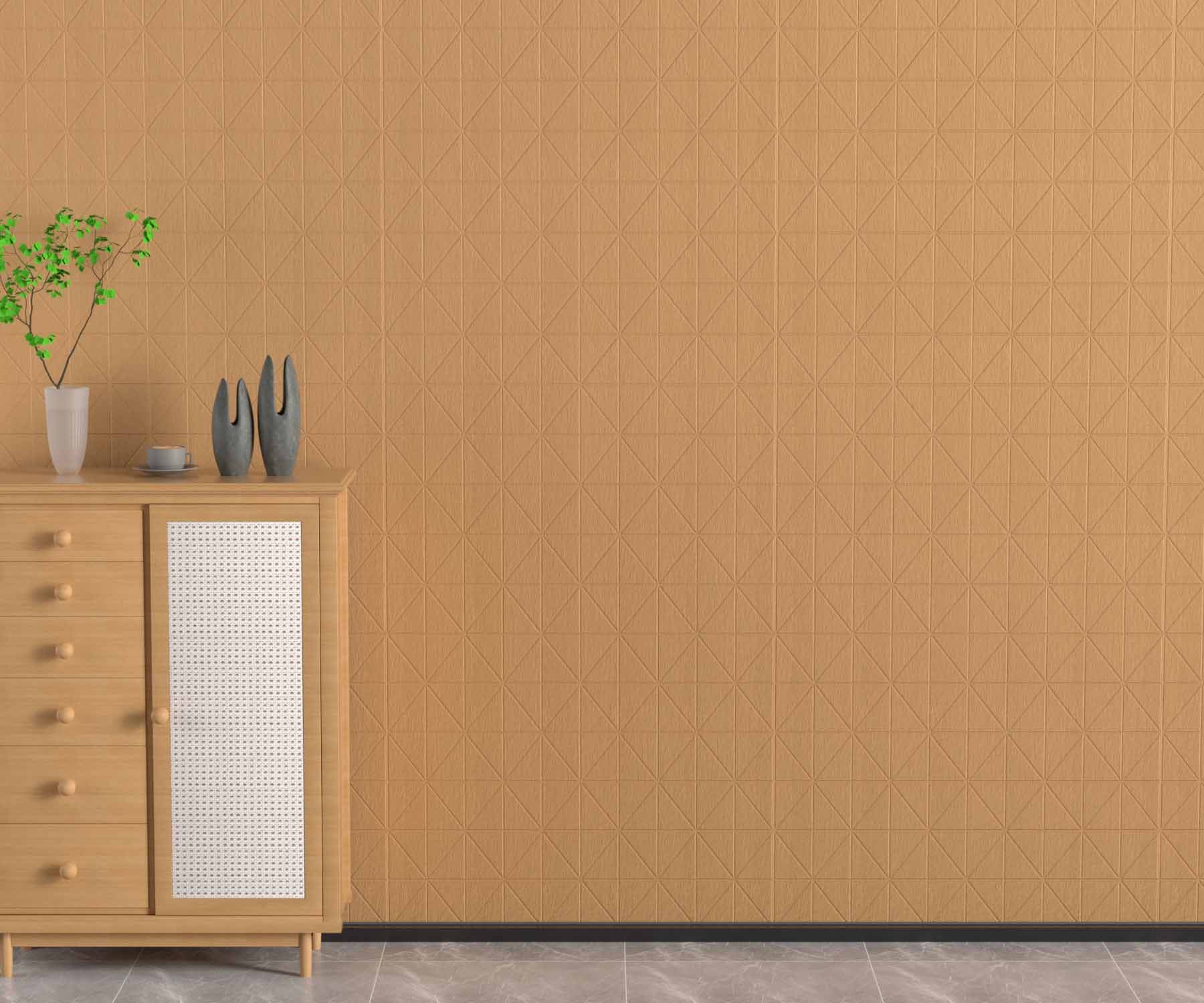
Acoustic panels are increasingly becoming visible architectural elements.
Instead of asking:
“How can we hide the acoustic treatment?”
designers are increasingly asking:
“How can the acoustic treatment become part of the design?”
This has encouraged the development of:
- Decorative PET acoustic panels
- Geometric acoustic wall panels
- CNC-cut acoustic panels
- 3D acoustic panels
- Curved acoustic panels
- Acoustic ceiling systems
- Wood slat acoustic panels
- Custom branded acoustic elements
The market is moving toward products that combine acoustic performance with architectural identity. Industry analysis for 2026 specifically identifies design-led customization, parametric cutouts, layered forms, and digital fabrication as important competitive directions for PET acoustic products.
4. Customization Is Becoming a Competitive Advantage
Standard rectangular panels remain important, particularly for large commercial projects.
However, customization is becoming increasingly valuable.
Architects and designers may request:
- Custom colors
- Custom dimensions
- Custom patterns
- CNC-cut graphics
- Brand logos
- Curved shapes
- Special edge treatments
- Integrated lighting patterns
- Modular configurations
This trend is closely connected to the development of digital fabrication and CNC technology.
A designer can create a digital pattern and transfer it directly into a manufacturing workflow.
As a result, custom acoustic wall panels can be produced with much greater flexibility than in the past.
For manufacturers, the competitive question is therefore shifting from:
“How cheaply can you manufacture standard panels?”
to:
“How efficiently can you manufacture customized architectural products at scale?”
5. Acoustic Performance and Visual Performance Are Converging
Historically, acoustic specifications and interior design specifications were often considered separately.
In 2026, these two areas are becoming increasingly integrated.
For example, a designer may specify a PET acoustic panel based on:
- NRC or sound absorption performance
- Fire performance
- Color
- Pattern
- Thickness
- Recycled content
- VOC characteristics
- Installation method
A successful acoustic product therefore needs to satisfy multiple requirements simultaneously.
This is particularly important for architectural acoustic panels, where the product is not simply a technical component but also part of the visible interior environment.
6. Office Acoustic Solutions Remain a Major Application
The office sector continues to be one of the most important application areas for acoustic panels.
Open-plan offices create a familiar acoustic challenge:
Too much speech and too many reflective surfaces.
As companies continue to use flexible workplace layouts, demand remains strong for:
- Acoustic wall panels
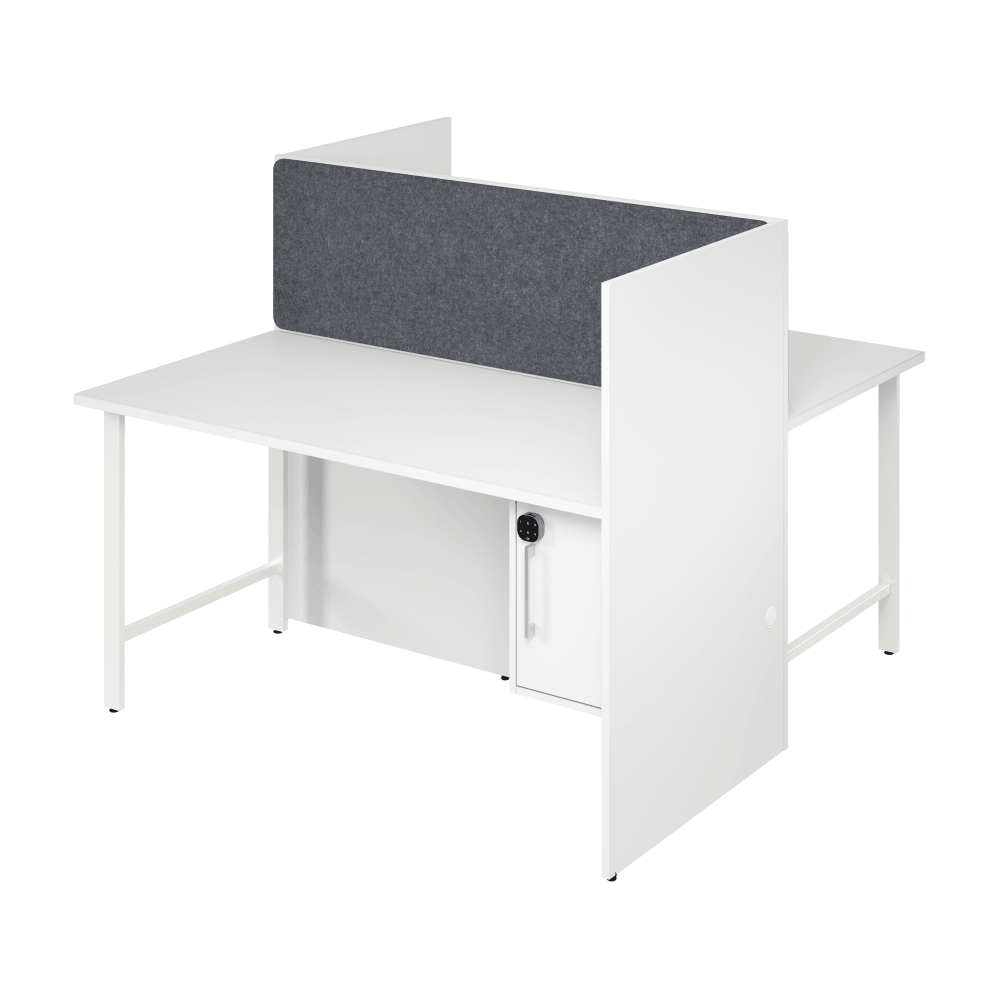
- PET desk screens
- Acoustic workstation partitions
- Freestanding acoustic screens
- Ceiling acoustic panels
- Meeting-room acoustic treatment
The sustainable acoustic panel market research currently available identifies commercial offices as a leading application segment, reflecting continued demand for acoustic comfort and sustainability-oriented workplace design.
For manufacturers, this means office acoustics is increasingly about creating a complete acoustic environment, rather than selling one type of panel.
7. Renovation and Retrofit Projects Are Creating New Demand
Not all acoustic panel growth comes from new construction.
Existing offices, schools, hotels, restaurants, and commercial buildings increasingly require acoustic improvements without major structural renovation.
This creates an attractive market for products that are:
- Lightweight
- Easy to cut
- Easy to install
- Suitable for existing walls
- Suitable for ceiling applications
- Compatible with modular installation systems
PET acoustic panels are particularly suitable for retrofit projects because they can often be installed without major demolition.
This creates an important opportunity for distributors and contractors serving renovation markets.
8. The Market Is Moving From Products to Acoustic Systems
Another important 2026 trend is the move from individual products toward integrated acoustic systems.
Rather than purchasing only a wall panel, project teams increasingly need a combination of:
- Wall panels
- Ceiling treatments
- Desk screens
- Freestanding partitions
- Acoustic baffles
- Installation systems
- Custom components
This allows manufacturers to become solution providers rather than simply product suppliers.
For example, an office project may use:
PET acoustic wall panels + desk screens + ceiling baffles + meeting-room acoustic treatment
as one coordinated acoustic package.
This system-based approach can also simplify procurement and installation.
9. Circularity Is Becoming More Important Than Simple Recycled Content
A major evolution in sustainability is the shift from asking:
“Is this product made from recycled material?”
to asking:
“What happens to the product throughout its entire life cycle?”
This means buyers are increasingly interested in:
- Recycled content
- Material efficiency
- Production waste
- Product longevity
- Repairability
- Reusability
- Recyclability
- End-of-life management
For acoustic panel manufacturers, circularity creates both challenges and opportunities.
Reducing production waste, optimizing CNC cutting patterns, improving packaging efficiency, and developing more recyclable product structures can become important differentiators.
Industry research in 2026 has highlighted this movement toward more specific sustainability documentation and circularity rather than broad environmental claims.
10. Sustainability Claims Are Becoming More Evidence-Based
Another important change for 2026 is that buyers are becoming more skeptical of generic environmental claims.
Terms such as:
- Eco-friendly
- Green
- Sustainable
- Environmentally friendly
are increasingly insufficient on their own.
Professional buyers may instead request:
- Recycled content information
- VOC testing
- Fire test reports
- Acoustic test reports
- Material declarations
- Environmental certifications
- Supply-chain information
This means documentation is becoming part of the product.
For international acoustic panel suppliers, the ability to provide clear and accurate technical documentation can become a significant competitive advantage.

11. Fire Safety Remains a Critical Product Requirement
While sustainability and design are becoming increasingly important, they do not replace basic building-performance requirements.
For commercial acoustic panels, fire performance remains a critical consideration.
Depending on the market, buyers may request standards such as:
- ASTM E84
- EN 13501-1
- Other local fire classification standards
Products may also need to satisfy requirements relating to smoke development, flame spread, and flaming droplets.
As acoustic panels cover large wall or ceiling surfaces, architects and contractors increasingly expect suppliers to provide clear fire-testing documentation alongside acoustic data.
12. Supply Chain Reliability Is Becoming Part of Product Value
The acoustic panel market has also learned an important lesson from recent global supply-chain disruptions.
For distributors and large project buyers, the cheapest quotation is not necessarily the best commercial option.
Increasingly important purchasing factors include:
- Stable lead times
- Production capacity
- Raw material availability
- Color consistency
- Inventory planning
- Regional warehousing
- Multi-market supply capability
This is especially important for distributors developing long-term product lines.
A panel color that cannot be reproduced consistently six or twelve months later creates a serious problem for distributors, architects, and furniture manufacturers.
As a result, manufacturing consistency is becoming part of the product specification.
13. Color and Material Customization Will Continue to Grow
PET acoustic panels are particularly well positioned for design customization because color can be integrated into the fiber material rather than applied only as a surface coating.
This allows manufacturers to offer:
- Neutral architectural colors
- Corporate colors
- Custom project colors
- Multi-color patterns
- Gradient effects
- Decorative combinations
For large projects, however, color consistency becomes essential.
Professional manufacturers increasingly use controlled formulations, standardized production parameters, and instrumental color measurement to minimize batch-to-batch variation.
This is particularly important for distributors who expect the same product color to remain available across multiple future orders.
14. Wood Slat Acoustic Panels Continue to Bridge Acoustics and Architecture
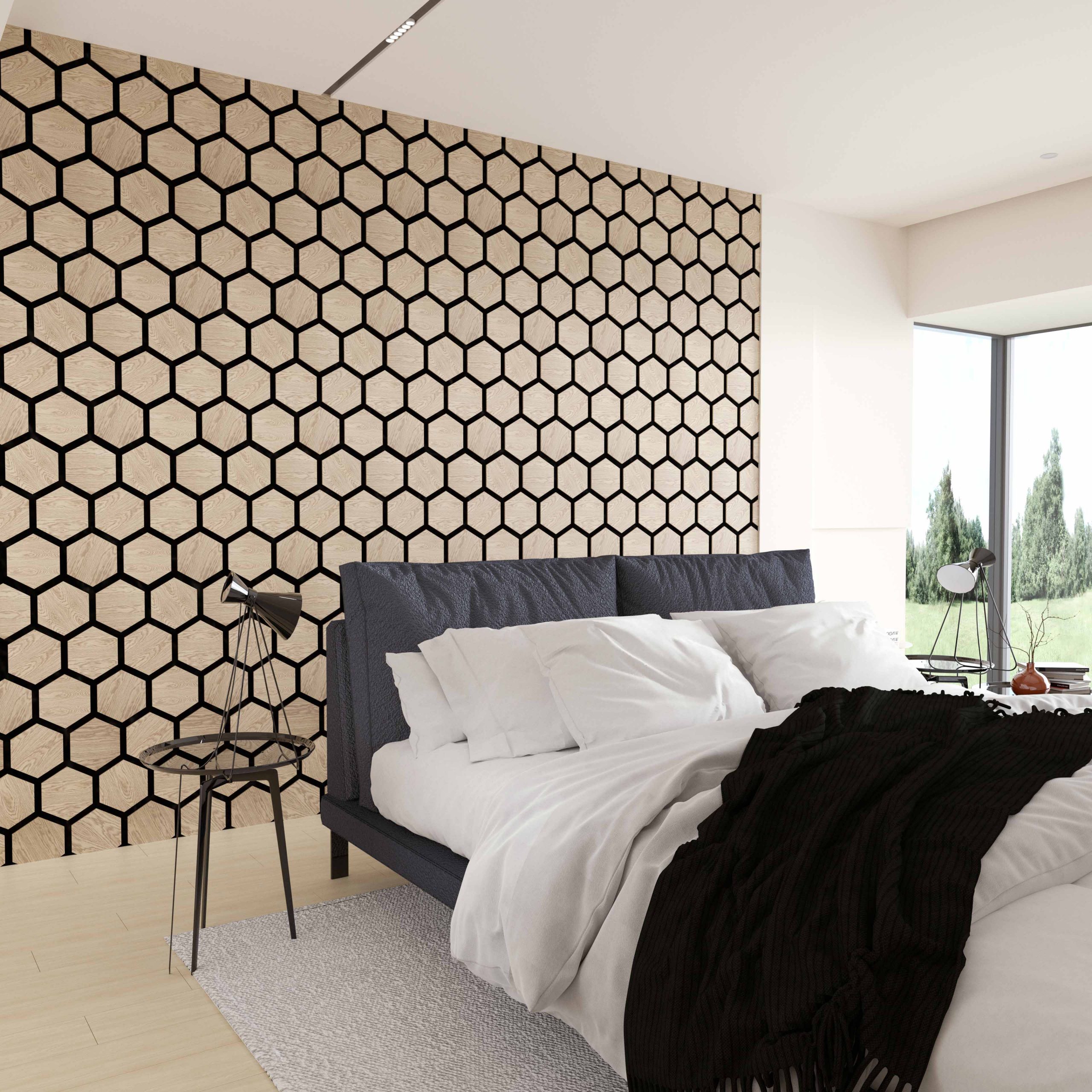
While PET acoustic panels are gaining momentum, wood slat acoustic panels, often referred to as Akupanels, remain highly attractive for architectural interiors.
Their popularity comes from combining:
- Natural wood aesthetics
- Sound absorption
- Warm interior character
- Modular installation
- Commercial design flexibility
This makes wood slat acoustic panels particularly suitable for:
- Hotels
- Restaurants
- Offices
- Meeting rooms
- Residential interiors
- Hospitality spaces
The broader market trend is therefore not toward one material replacing all others.
Instead, designers are selecting different acoustic materials according to the required combination of:
performance + appearance + sustainability + budget + installation requirements.
15. What These Trends Mean for Acoustic Panel Buyers
For importers, distributors, architects, and furniture manufacturers, the 2026 market creates several practical implications.
When evaluating an acoustic panels supplier, buyers should look beyond unit price.
Consider asking:
Acoustic Performance
- What acoustic test data is available?
- What thicknesses are available?
- How does installation affect performance?
Sustainability
- What percentage of recycled content is used?
- Is the recycled content documented?
- What VOC information is available?
- How is production waste managed?
Design
- Can the supplier develop custom colors?
- Are CNC patterns available?
- Can custom dimensions be produced?
- Can the manufacturer support OEM/ODM projects?
Quality Control
- How is color consistency controlled?
- What dimensional tolerances are maintained?
- How are production batches recorded?
Supply Chain
- What is the production capacity?
- What is the typical lead time?
- Can long-term inventory programs be supported?
- Can the supplier maintain a consistent product specification over multiple years?
These questions can help distinguish a genuine manufacturing partner from a simple trading supplier.

What 2026 Means for Acoustic Panel Manufacturers
For manufacturers, the market is becoming increasingly competitive.
The traditional model was:
Manufacture → Quote → Ship
The emerging model is:
Material innovation → Acoustic performance → Design customization → Sustainability documentation → Manufacturing consistency → Global supply
Manufacturers that can combine these capabilities will be better positioned to serve international distributors and large architectural projects.
Leedings Acoustic: Combining Acoustic Performance, Sustainability and Design
At Leedings Acoustic, we see the future of acoustic products as a combination of performance, sustainability, design flexibility, and manufacturing reliability.
Our product portfolio includes:
- PET acoustic panels
- Polyester fiber acoustic panels

- Acoustic wall panels
- Acoustic desk screens
- Acoustic ceiling solutions
- Wood slat acoustic panels
- Custom acoustic products
We support international customers with:
- OEM and ODM manufacturing
- Custom colors and dimensions
- CNC cutting
- Project-specific product development
- Technical documentation
- Large-scale production
- Global B2B supply
This approach allows distributors, architects, furniture manufacturers, and contractors to develop acoustic solutions that are not only acoustically effective but also visually integrated into the spaces they serve.
Conclusion: Where Is the Global Acoustic Panel Market Going in 2026?
The global acoustic panel market is becoming more sophisticated.
The key trends are no longer simply about reducing noise. Instead, the industry is increasingly focused on how acoustic products can simultaneously contribute to:
Acoustic performance + Sustainability + Design + Customization + Circularity + Supply Chain Reliability
Recycled PET and other sustainable materials are becoming increasingly important. At the same time, acoustic panels are becoming more visible elements of architectural design, supported by CNC fabrication and customization technologies. Market research also points to continued growth in demand for environmentally responsible, customized, and design-integrated acoustic solutions.
For buyers, this means choosing an acoustic panel supplier is no longer simply a matter of comparing prices.
The best long-term partner should be able to deliver consistent quality, verified performance, sustainable materials, design flexibility, and reliable supply.
And for manufacturers, the future belongs to companies that can turn acoustic products from functional materials into integrated architectural solutions.