Cutting Akupanels: Tools and Techniques for Perfect Edges
Akupanels, also known as wood slat acoustic wall panels, are widely used in modern interiors for both sound absorption and decorative design. During installation, however, panels often need to be trimmed to fit specific wall dimensions, outlets, or corner spaces.
A common question from installers and distributors is: how can you cut akupanels while maintaining clean, professional edges?
With the right tools and proper technique, akupanels can be cut easily without damaging the wood veneer. In this guide, Leedings Acoustic, a professional acoustic panels supplier in China, explains the recommended methods to achieve perfect cutting results.
Understanding the Structure of Akupanels
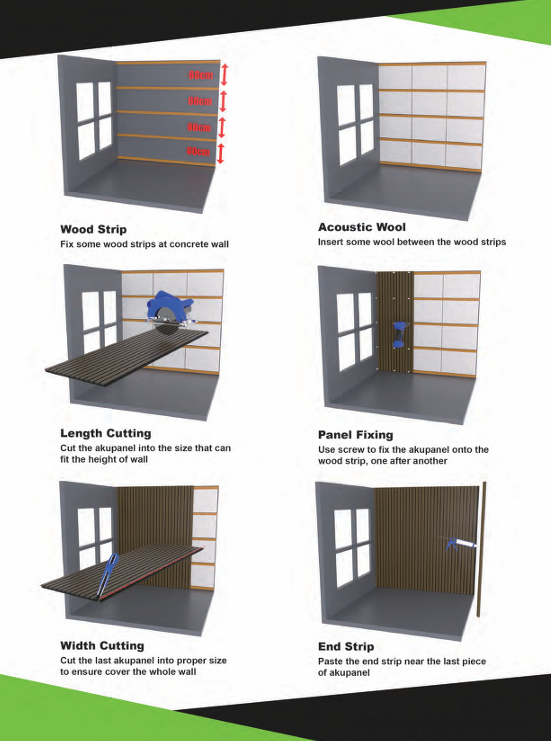
Before cutting, it is helpful to understand how akupanels are constructed. Most wood slat acoustic panels consist of three components:
Decorative wood veneer slats
MDF core for structural stability
PET acoustic felt backing for sound absorption
Because these layers combine different materials, cutting requires controlled tools that minimize vibration and prevent veneer chipping.
High-quality acoustic panels from China, such as those produced by Leedings Acoustic, are manufactured with stable veneer bonding, making them easier to cut cleanly during installation.

Best Tools for Cutting Akupanels
Using the correct cutting tools is the most important factor in achieving smooth edges.
1. Circular Saw
A circular saw is one of the most commonly used tools for trimming acoustic wall panels on site.
Recommended blade:
Fine-tooth blade (60–80 teeth)
Carbide-tipped blade for laminated or veneered boards
This type of blade reduces tearing and ensures smooth cuts along the wood slats.
2. Table Saw
For factory or workshop environments, a table saw provides the highest precision.
Advantages include:
Stable cutting platform
Straight and consistent cuts
Ideal for large quantities of akupanels
Many professional installers prefer this method when preparing panels before installation.
3. Track Saw
A track saw is often the preferred option for high-end interior projects.
Benefits include:
Extremely straight cuts
Reduced vibration
Minimal veneer chipping
This tool is especially useful for cutting full-length acoustic wall panels installed in offices, studios, and commercial interiors.

Proper Cutting Techniques for Clean Edges
Even with the right tools, technique plays a crucial role.
Cut with the Veneer Facing Down
When using a circular saw or table saw:
Place the wood veneer side facing downward
This ensures the blade exits through the veneer cleanly, reducing tear-out.
Use Masking Tape Along the Cutting Line
Applying masking tape over the cutting line can help stabilize the veneer fibers and reduce chipping.
Steps:
Mark the cutting line
Apply masking tape over the line
Cut slowly through the taped area
This method is widely used by professional installers of akupanels.
Secure the Panel Properly
Before cutting, make sure the panel is fully supported to prevent vibration.
Tips:
Clamp the panel firmly
Use a stable cutting surface
Avoid cutting while the panel is unsupported
Proper support ensures cleaner cuts and protects the integrity of the acoustic wall panels.
Finishing the Edges After Cutting
After cutting akupanels, minor finishing may be needed.
Recommended methods:
Light sanding using fine-grit sandpaper (180–220 grit)
Cleaning dust from the cut edge
Touch-up if necessary with matching wood veneer edge tape
These steps ensure the panel edges remain clean and visually consistent with the rest of the installation.
Factory Precision vs On-Site Cutting
For large projects, working with a reliable acoustic panels supplier can simplify installation.
At Leedings Acoustic, we offer:
Standard panel sizes for easy on-site cutting
Custom panel sizes for project-specific requirements
Consistent veneer quality to reduce cutting issues
As an experienced acoustic panels China manufacturer, we design akupanels that are installer-friendly while maintaining high acoustic performance.
Conclusion
Cutting akupanels does not have to be difficult. With the right tools and proper technique, installers can achieve clean edges and maintain the elegant appearance of wood slat acoustic wall panels.
Key points to remember:
Use fine-tooth blades designed for veneer boards
Cut with the veneer facing downward
Support the panel properly to reduce vibration
Finish edges carefully after cutting
If you are looking for a reliable acoustic panels supplier in China, Leedings Acoustic provides high-quality akupanels and acoustic wall panels designed for easy installation and long-term performance.