

Wood slat akupanels are a popular choice for modern interior spaces because they combine acoustic performance with a distinctive architectural appearance. One of the most common design questions from installers, architects, and distributors is:
Can Akupanels be installed vertically or horizontally?
Yes. Akupanels can generally be installed in either vertical or horizontal orientations, provided that the chosen installation method is suitable for the wall structure and product construction.
However, changing the orientation does more than simply change the appearance of the room. It can also affect the visual proportions of the space, panel layout, cutting requirements, and installation details.
In this guide, Leedings Acoustic, a professional acoustic panels supplier in China, explains the differences between vertical and horizontal Akupanel installation and how to choose the right orientation for your project.
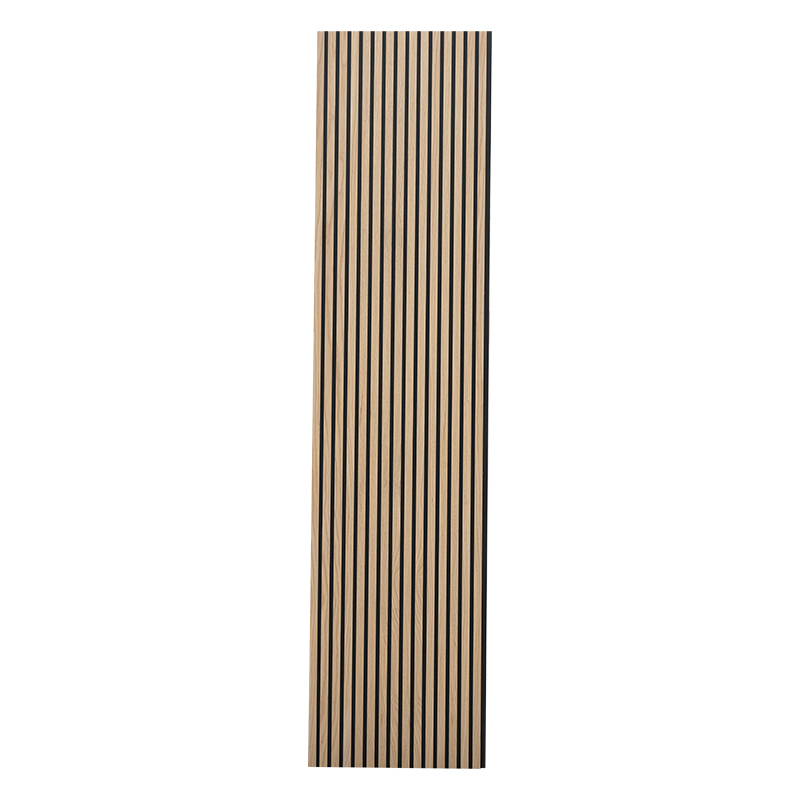
Can Akupanels Be Installed in Both Directions?
In most applications, wood slat acoustic panels can be installed vertically or horizontally.
The basic acoustic function of the panel remains the same because sound absorption depends primarily on factors such as:
- Panel material
- Thickness
- Density
- Surface coverage
- Air gap behind the panel
- Installation environment
The orientation of the slats itself is not normally the primary factor determining acoustic performance.
However, the installation direction can have a significant impact on the visual appearance and construction details of the project.
Vertical Akupanels
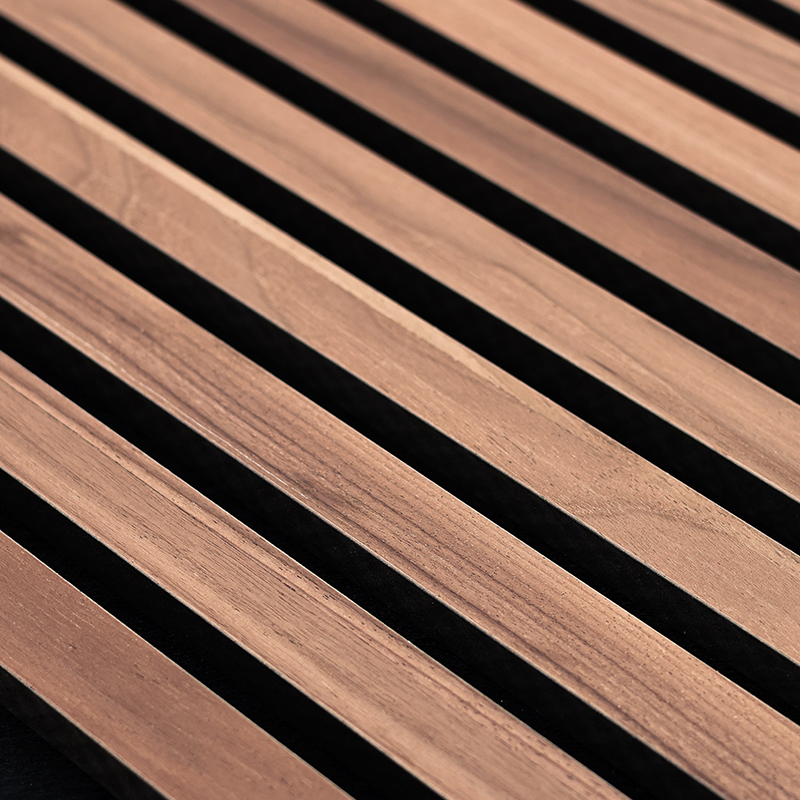
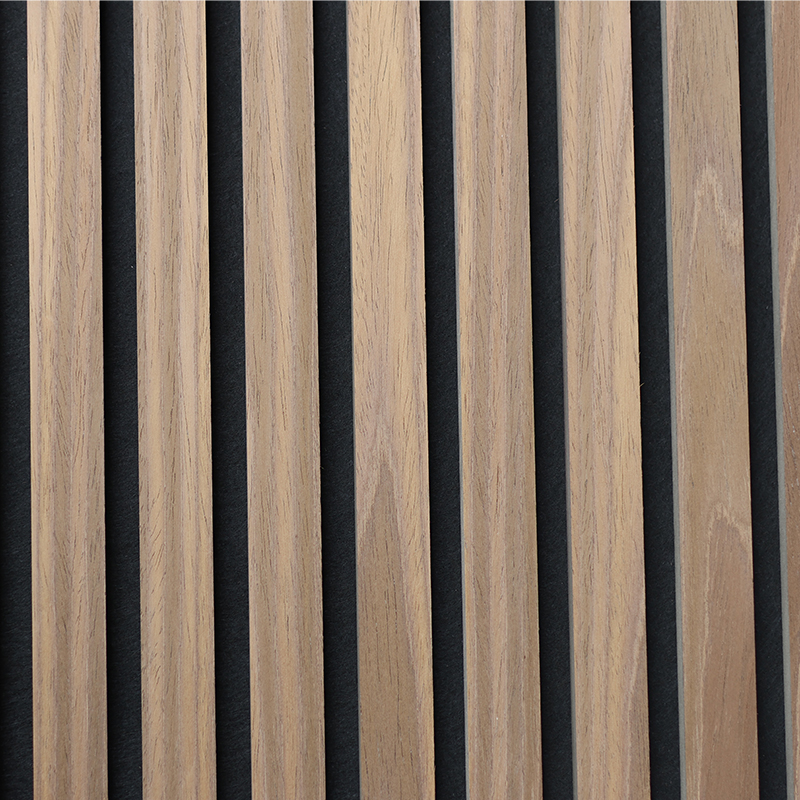
Vertical installation means the wood slats run from the floor toward the ceiling.
This is one of the most common configurations for acoustic wall panels.
Advantages of Vertical Installation
Makes Ceilings Appear Higher
Vertical lines naturally draw the eye upward.
This can make a room appear:
- Taller
- More spacious
- More architectural
This is particularly useful in rooms with relatively low ceilings.
Creates a Clean Architectural Appearance
Vertical akupanels create strong linear lines that work well with contemporary interior design.
They are commonly used in:
- Offices
- Hotels
- Restaurants
- Reception areas
- Residential living spaces
Simplifies Full-Height Wall Applications
If the standard panel height closely matches the ceiling height, vertical installation can reduce the number of horizontal joints.
Horizontal Akupanels
Horizontal installation means the wood slats run from one side of the wall to the other.
This creates a completely different visual effect.
Advantages of Horizontal Installation
Makes a Wall Appear Wider
Horizontal lines visually emphasize the width of a room.
This can make a narrow space appear broader.
Creates a Strong Feature-Wall Effect
Horizontal akupanels can provide a more distinctive architectural appearance, particularly when installed across a large uninterrupted wall.
Useful for Low-Level Applications
Horizontal installation can also work well when the acoustic treatment only needs to cover part of a wall rather than the entire height.
Vertical vs. Horizontal Akupanels
| Feature | Vertical Installation | Horizontal Installation |
|---|---|---|
| Visual effect | Makes ceilings appear higher | Makes walls appear wider |
| Common application | Full-height walls | Feature walls |
| Design style | Clean and architectural | Wide and expansive |
| Joint planning | Often fewer horizontal joints | May require more vertical joints |
| Best for | Offices, hotels, residential interiors | Feature walls, corridors, commercial interiors |
| Acoustic principle | Generally similar | Generally similar |
The best orientation ultimately depends on the room geometry and design concept.
Does Orientation Affect Acoustic Performance?
This is a common misconception.
Simply rotating an acoustic wall panel from vertical to horizontal does not automatically produce a major change in its sound absorption performance.
The more important factors are:
Panel Thickness
Thicker akupanels generally provide greater absorption potential, particularly when combined with an appropriate air cavity.
PET Felt Backing
The acoustic PET felt provides an important sound-absorbing surface behind the wood slats.
Air Gap
An air gap between the panel and wall can improve absorption, particularly at lower frequencies.
Total Wall Coverage
The amount of acoustic treatment installed in the room has a major influence on overall acoustic performance.
Therefore, the installation orientation should primarily be selected according to design, wall dimensions, and installation requirements, rather than assuming one direction automatically absorbs more sound.
What Should You Consider Before Choosing the Orientation?
1. Wall Dimensions
The first consideration should be the size and proportions of the wall.
For a tall wall:
Vertical installation may create a more natural visual proportion.
For a long, narrow wall:
Horizontal installation can emphasize the width.
2. Ceiling Height
Low ceilings often benefit from vertical akupanels, which create stronger vertical visual lines.
High or particularly wide spaces may provide more flexibility for horizontal layouts.
3. Existing Fixtures
Consider the location of:
- Electrical sockets
- Light switches
- Windows
- Doors
- HVAC vents
- Wall-mounted displays
The orientation that minimizes difficult cutouts may reduce installation time and material waste.
Installation Considerations for Vertical Akupanels
When installing panels vertically, installers should pay particular attention to:
- A perfectly level starting line
- Consistent panel height
- Vertical alignment between neighboring panels
- The transition between the ceiling and floor
A small error in the first panel can become more visible as additional panels are installed.
Using a laser level is highly recommended.
Installation Considerations for Horizontal Akupanels
Horizontal installation requires particular attention to:
- Level alignment
- Panel joint positioning
- Consistent horizontal lines
- Wall width measurements
Any slight deviation can become visible across a long wall.
For large commercial projects, it is often beneficial to establish multiple reference points rather than relying on only the first panel.
Can Akupanels Be Installed on Ceilings Horizontally?
Yes.
When the panels are installed on a ceiling, the orientation should be selected based on:
- Room dimensions
- Lighting layout
- Ceiling structure
- Joint arrangement
- Visual design
However, ceiling installation requires additional attention to mechanical fixing and load support.
For overhead applications, installers should not rely solely on adhesive unless the specific installation system has been verified as suitable.
Which Direction Is Better for Commercial Projects?
There is no universal answer.
Vertical Installation Is Often Preferred For:
- Office feature walls
- Hotel interiors
- Reception areas
- Full-height architectural walls
- Spaces where greater ceiling height is desired visually
Horizontal Installation Is Often Preferred For:
- Long feature walls
- Corridors
- Low-ceiling rooms
- Media walls
- Wide commercial interiors
For large projects, the final decision should be based on both the architectural design and installation efficiency.
Can the Same Akupanel Be Rotated 90 Degrees?
In many cases, yes, but installers should verify the specific product construction before doing so.
Important considerations include:
- Panel dimensions
- Mounting system
- Slat direction
- Edge configuration
- Manufacturer installation instructions
For custom-cut or system-based products, the mounting method may be designed specifically for one orientation.
Before large-scale installation, a small mock-up is recommended.
How Orientation Affects Material Usage
Orientation can also influence material efficiency.
For example, if a wall is approximately the same height as the standard panel length, vertical installation may reduce cutting waste.
On a very wide but relatively low wall, horizontal installation may offer better material utilization.
For large commercial projects, optimizing the layout before production can reduce:
- Material waste
- Cutting costs
- Installation time
- Shipping volume
A professional acoustic panels supplier can help optimize the panel layout based on the project dimensions.
Why Choose Leedings Acoustic for Akupanels?
At Leedings Acoustic, we manufacture wood slat akupanels and acoustic wall panels for distributors, contractors, furniture manufacturers, architects, and commercial projects worldwide.
Our solutions include:
- Standard Akupanel sizes
- Custom panel dimensions
- Multiple wood veneer options
- PET felt backing in various colors
- OEM and ODM manufacturing
- Technical support for installation
As an experienced acoustic panels China manufacturer, we can also help customers evaluate panel orientation, dimensions, and installation requirements before production.
Frequently Asked Questions
Is vertical or horizontal Akupanel installation better?
Neither orientation is universally better. Vertical installation tends to emphasize room height, while horizontal installation emphasizes wall width. Acoustic performance depends more on panel construction, coverage, thickness, and installation method.
Can Akupanels be installed horizontally on any wall?
Usually, but the specific mounting system and panel construction should be checked first. Uneven walls may require a batten system to create a level mounting surface.
Does rotating Akupanels change their acoustic performance?
Generally, rotating the panel does not fundamentally change its sound absorption characteristics. Installation configuration, air gaps, coverage, and panel specifications are more important factors.
Which direction produces less installation waste?
That depends on the wall dimensions and standard panel size. A layout optimized to the actual project dimensions can significantly reduce cutting waste.
Conclusion
Akupanels can generally be installed both vertically and horizontally, giving architects and designers considerable flexibility.
Choose vertical installation when you want to emphasize ceiling height, create strong vertical lines, or achieve a full-height architectural finish.
Choose horizontal installation when you want to emphasize wall width, create a feature-wall effect, or work with a wide, relatively low wall.
Regardless of orientation, careful measurement, proper alignment, and an appropriate mounting system are essential for achieving a professional result.
For high-quality akupanels, acoustic wall panels, and customized project solutions, Leedings Acoustic is a professional acoustic panels supplier in China serving global B2B customers.