

Wood slat akupanels are widely used as decorative acoustic wall panels in modern interiors. While installation is typically straightforward, one common challenge installers face is dealing with uneven walls.
Uneven surfaces can lead to poor panel alignment, visible gaps, and reduced visual quality. In some cases, improper installation may even affect the stability of the panels.
So, how do you install akupanels on uneven walls properly?
In this guide, Leedings Acoustic, a professional acoustic panels supplier in China, outlines the most effective solutions used in real projects.
Why Uneven Walls Are a Problem
Walls may appear flat but often have:
- Surface waves or bumps
- Structural irregularities
- Old construction imperfections
- Misaligned drywall or plaster
When installing acoustic wall panels directly onto such surfaces, issues may include:
- Panels not sitting flush
- Visible bending or gaps
- Difficulty maintaining straight alignment
This is why proper preparation is critical before installing akupanels.
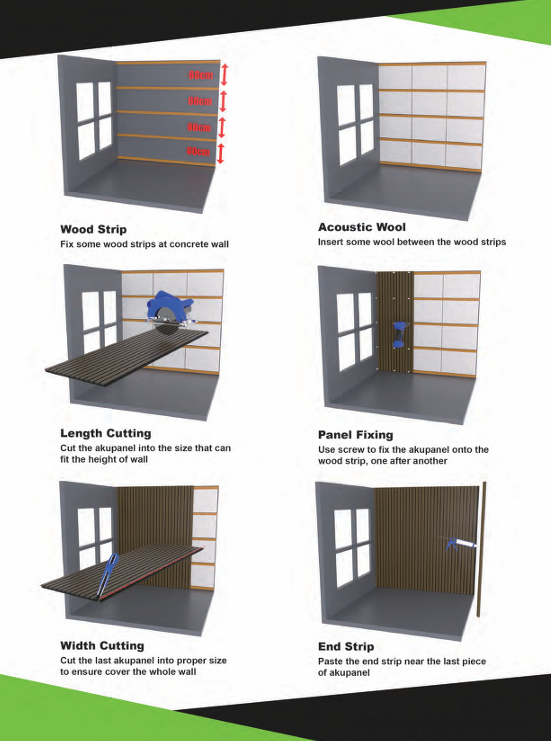
Solution 1: Use a Batten System (Recommended)
The most effective solution is installing a batten system.
How it works:
- Fix wooden or metal battens onto the wall
- Adjust battens to create a perfectly level surface
- Attach akupanels onto the battens
Advantages:
- Creates a flat installation base
- Improves panel alignment
- Adds an air gap for better acoustic performance
This method is widely recommended by professional acoustic panels suppliers and is ideal for both residential and commercial projects.

Solution 2: Shim and Level the Wall Surface
For minor unevenness, installers can use shims to adjust panel positioning.
Steps:
- Identify low and high points on the wall
- Insert shims behind fixing points
- Adjust panel position during installation
Best for:
- Slight wall irregularities
- Small installation areas
This method allows acoustic wall panels to sit more evenly without building a full substructure.
Solution 3: Surface Preparation Before Installation
In some cases, the wall itself can be corrected before installing akupanels.
Methods include:
- Applying leveling compound
- Sanding high spots
- Reinstalling drywall sections
When to use:
- High-end projects requiring perfect finishes
- Situations where structural correction is feasible
Although more time-consuming, this approach ensures the best final appearance.

Solution 4: Combine Adhesive and Mechanical Fixing
When dealing with uneven walls, relying on adhesive alone is not recommended.
Instead, use a combined method:
- Apply construction adhesive for surface contact
- Use screws for structural fixing
This ensures that akupanels remain securely installed even if the wall surface is inconsistent.
Solution 5: Use Flexible Installation Planning
Experienced installers often adapt their approach based on wall condition.
Practical tips:
✔ Start from the straightest reference line
✔ Install panels in sections and check alignment frequently
✔ Adjust cutting sizes to compensate for wall irregularities
✔ Avoid forcing panels onto uneven surfaces
Flexibility is key when installing acoustic wall panels in real-world conditions.
Common Mistakes to Avoid
When installing akupanels on uneven walls, avoid these common errors:
- Installing directly without checking wall flatness
- Using adhesive only on uneven surfaces
- Ignoring alignment during installation
- Skipping measurement and dry fitting
These mistakes can lead to poor results and costly rework.
Why Work with a Professional Acoustic Panels Supplier
High-quality panels make installation easier, even on imperfect walls.
At Leedings Acoustic, we provide:
- Consistent and stable akupanels
- Easy-to-install acoustic wall panels
- Technical guidance for installers
- Custom solutions for project requirements
As a leading acoustic panels supplier in China, we support global B2B clients with reliable products and installation expertise.
Conclusion
Installing akupanels on uneven walls can be challenging, but with the right approach, it can be handled effectively.
Key solutions include:
- Using a batten system for best results
- Applying shims for minor adjustments
- Preparing the wall surface when necessary
- Combining adhesive and screws for stability
With proper planning and technique, your acoustic wall panels can achieve a clean, professional finish even on imperfect surfaces.
For high-quality akupanels and expert support, Leedings Acoustic is your trusted acoustic panels supplier in China.